Incredible: This Shiny Rock We Dug Out Of The Ground Continues To Outperform Wages, Housing, And The Entire Digital Economy
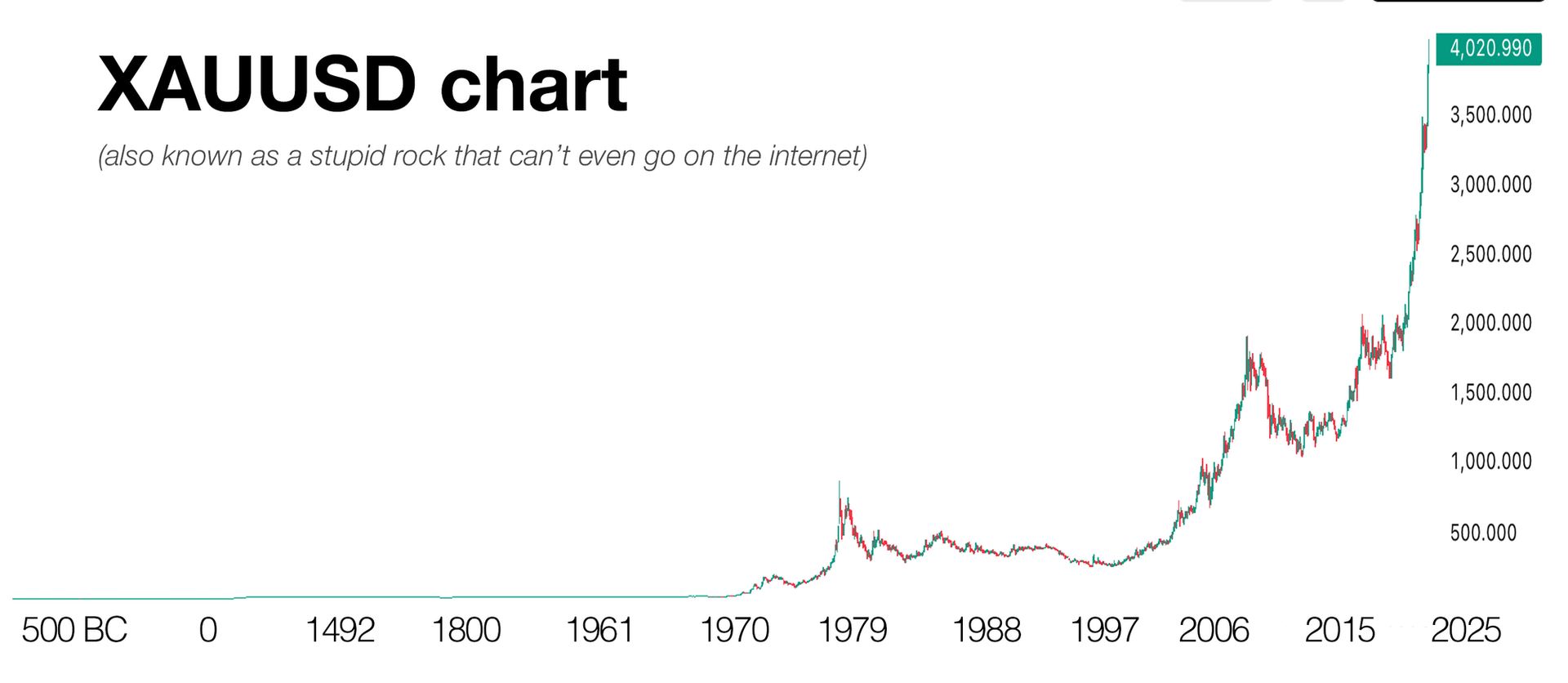
Gold cleared $4,000 an ounce this week. Commodity desks are now advising clients to allocate toward a metal first worked into jewelry in the Chalcolithic period.
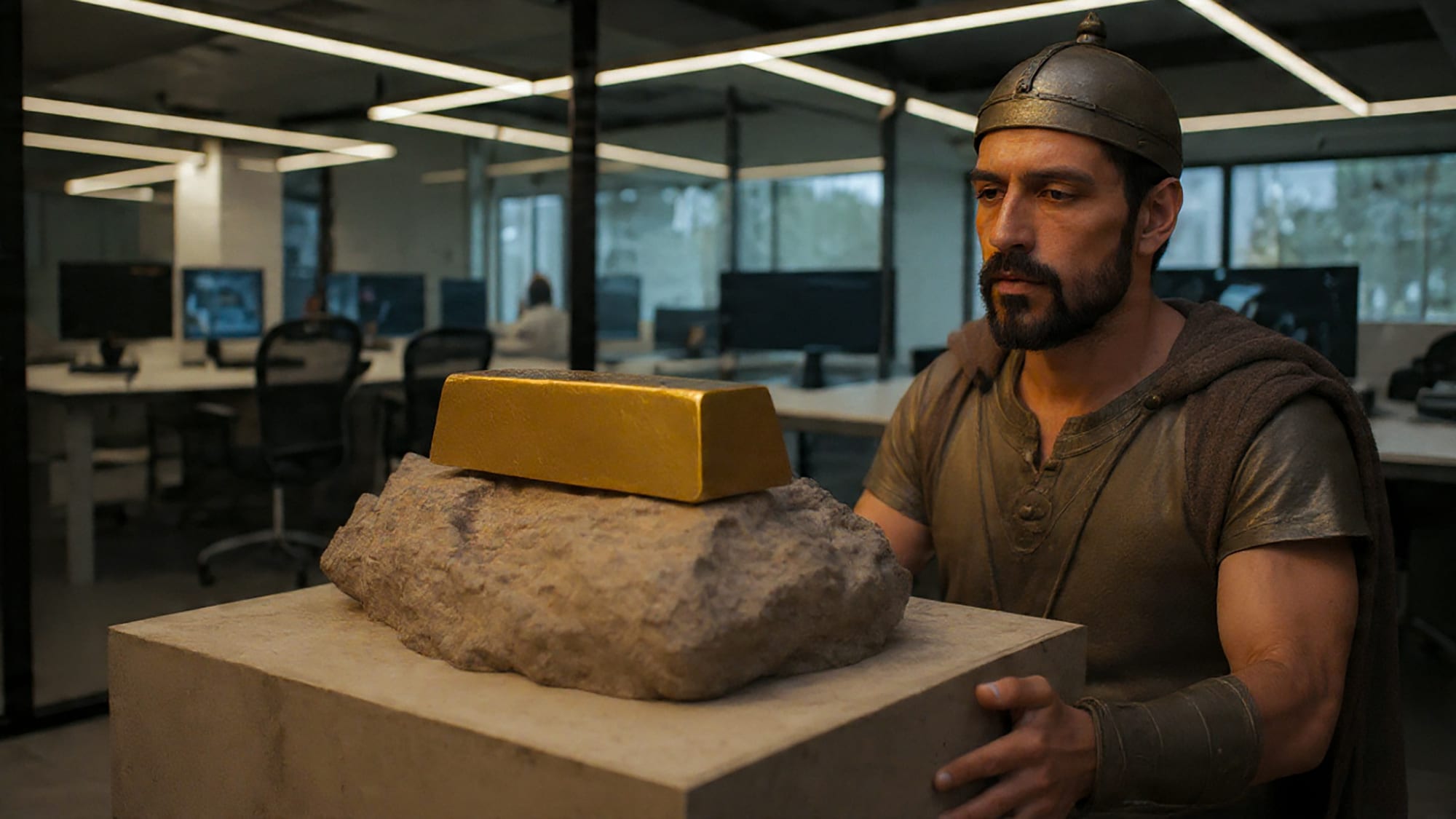
Analysts confirm the shiny yellow rock—best known for “looking cool as shit in crowns”—is somehow outperforming AI, smartphones, and the entire sector devoted to making your fridge talk to you.
NEW YORK, NY, October 8, 2025 — In a devastating blow to the entire concept of human progress, the price of gold (XAU/USD) surged past $4,000 an ounce this week, confirming that in the year 2025 AD, the global economy’s safe-haven asset of choice is a dense, lustrous metal first hammered into jewelry during the Chalcolithic period.
The rally is not driven by a sudden industrial demand for a mineral that is too soft for most practical applications. Instead, it is fueled by a much simpler, more ancient force: the dawning, collective realization that nothing else is real.
“Confidence is down,” a Fed governor admitted on background, a phrase he has reportedly been whispering to himself for years while staring at inflation charts. “When people lose faith in institutions, in currencies, and in the future itself, they don’t buy innovative tech. They buy the shiny rock. It’s barbaric. And it’s working.”
The trend has forced a grim acceptance on Wall Street. “Our models are telling us to significantly increase allocation to a Bronze Age relic,” said Jessica Chen, head of commodity strategy at Morgan Stanley, with a heavy sigh. “We have an AI that can write poetry, and we’re telling clients to buy something you could have traded for a goat in 4000 BC. I can't believe I went to school for this shit.”
The rally has been a moment of vindication for a generation of so-called “gold bugs,” who have long warned that the modern financial system was a house of cards.
“The sheeple are finally waking up,” wrote user @GoldenHordeRon on a prepper forum. “You can't print gold. You can't hack into it. Try paying for groceries with your little fintech app when the grid goes down. I'll be fine. My wealth is in a REAL asset I can hold in my hand, just like my ancestors who died of dysentery at age 28.”
The situation highlights a brutal paradox: We live in a world of breathtaking technological advancement. We have phones in our pockets that can access the entirety of human knowledge, yet the most rational store of value is a metal that predates the invention of the wheel.
It's an admission that for all our complexity—our derivatives, our algorithms, our blockchains—we have failed to create anything more trustworthy than a heavy, yellow element that doesn't even rust.
The future, it turns out, is a regression. And it is very, very shiny.