
The National FabricM · Revealed Preferences
M9M
Cargo-Bike Capitalists
A $2.1 million townhouse, a $9,000 electric cargo bike, and a structurally sophisticated critique of the system that produced both.
Reference marketFirst identified in Cambridge, Massachusetts (ZIP areas 02139, 02138, 02140, 02141, 02142).
Also found inBerkeley, California; Evanston, Illinois; Boulder, Colorado; Portland, Oregon; Takoma Park, Maryland.
Thesis
The household holds a correct and detailed theory of rent extraction and derives 84 percent of its net worth from it.
Anti-capitalist analysis, capitalist balance sheet, no car.
Portrait
In their own words
- Age42
- Income$310K
- Net worth$1.9M
- Education100%
- Home$2.1M
- Ownership100%
- HouseholdTwo earners, one child, one cargo bike
- VehicleA $9,000 electric cargo bike and a 2013 Subaru driven eleven times
- Debt$1.4M at 2.75%, described as luck
- Vice
- Public comment
- Most likely to
- Explain land value taxation at a meeting where he is objecting to a building
- Signals
- Cargo bike, co-op equity share, planning board agendas
Who they are
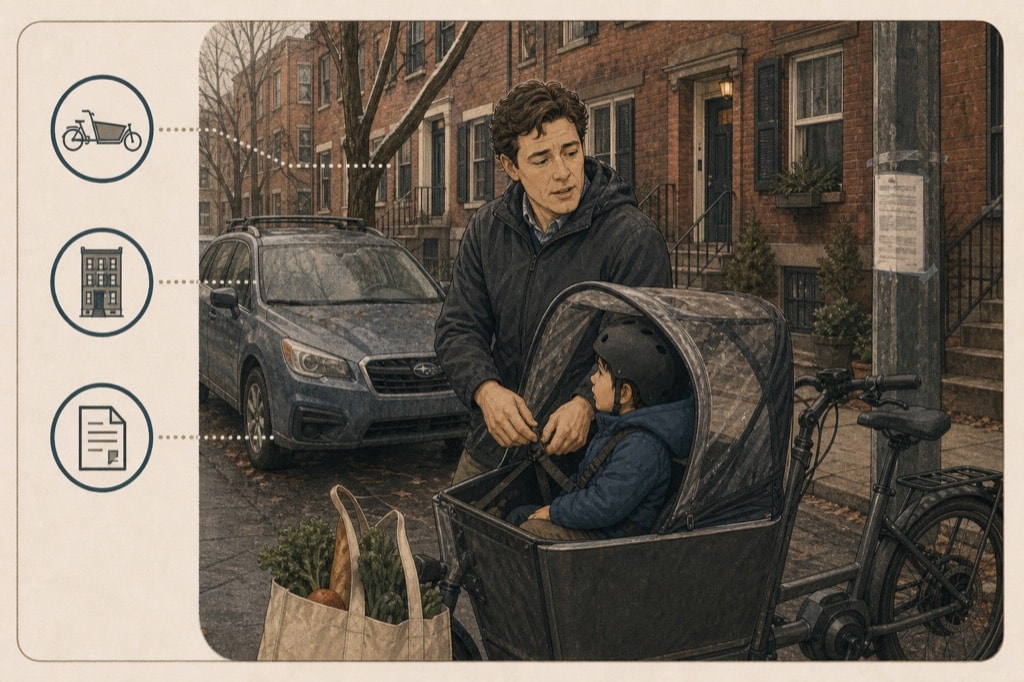
Two earners, 42 and 43, $310,000 combined, net worth $1.9 million, of which $1.6 million is a townhouse bought in 2016 and a mortgage at 2.75 percent they describe as luck. Both hold graduate degrees. One child, delivered to school on a $9,000 electric cargo bike with a rain canopy and two panniers. He can explain land value taxation, rent extraction, and the difference between profit and rent, correctly and at length. He has also filed written comment against a 40-unit building four blocks away, citing deficiencies in the shadow study. The Subaru was driven eleven times last year, a fact he introduces early. The house appreciated $340,000 during the eighteen months he spent opposing the building.
Our neighborhood
Pre-1930 stock — brick townhouses and triple-deckers subdivided in 1974 and reassembled in 2011 — on streets where a third of households keep no car and the ones that do keep it for the Cape. A co-op grocery with a $200 equity share, four bike shops, a bookstore, and a comment period that never closes. Nothing has been built on the block since 1961, and the block regards this as an achievement.
Shopping
The cargo bike cost $9,000 and is described as transportation infrastructure rather than a purchase. Groceries come from a co-op with a $200 equity share and a members' newsletter about supply chains. The 2013 Subaru is kept for the Cape. Purchases are researched, ethical, and expensive, in that order, and the research is the part he enjoys.
Spending
Income $310,000 against a $1.4 million balance at 2.75 percent, the single best financial decision the household has ever made and the one it takes the least credit for. Net worth $1.9 million, $1.6 million of it the house. Charitable giving runs $6,200 a year, the largest line of which goes to a housing organization.
Media
Two books on housing policy, one of them finished. A magazine subscription at $95 a year. The planning board agenda, read closely and in advance. He follows four economists and quotes the one who agrees with him about supply.
Interests
The public comment period, which is a hobby. A shadow study. Land value taxation, supported in principle and never once raised at a meeting concerning his own street. The child is on the back of the bike for all of it and has opinions of her own about the rain canopy.
Where they live
Darker is more of them.
M9 · CARGO-BIKE CAPITALISTS
ZIP CODES
—
How thick on the ground
$115K
Median household income
1.60× the national median
$1M
Typical home value
3.83× the national median
9.1×
Home value against income
2.42× the national median
66%
Bachelor's degree or higher
2.85× the national median
40%
Owner-occupied
Share of occupied units
$3,262
Median gross rent
Monthly, contract plus utilities
2.11
Average household size
Persons per occupied unit
37.1
Median age
Years
How they compare
Against the average American household.
Median household income
1.60×
$115K here$72K everywhere else
Typical home value
3.83×
$1M here$267K everywhere else
Bachelor's degree or higher
2.85×
66.3% here23.3% everywhere else
Home value against household income
2.42×
9.10× here3.76× everywhere else
Who lives next door
Household types that turn up on the same blocks.
 A2Peloton & PinotDual-income wellness couples optimizing their resting heart rate while their savings rate flatlines.
 A3Recently LiquidStartup exit hit. Personality did not survive the wire transfer.
 J1Credentialed DriftTwo master's degrees, one nonprofit salary, and a sense the meritocracy skipped their mailbox.
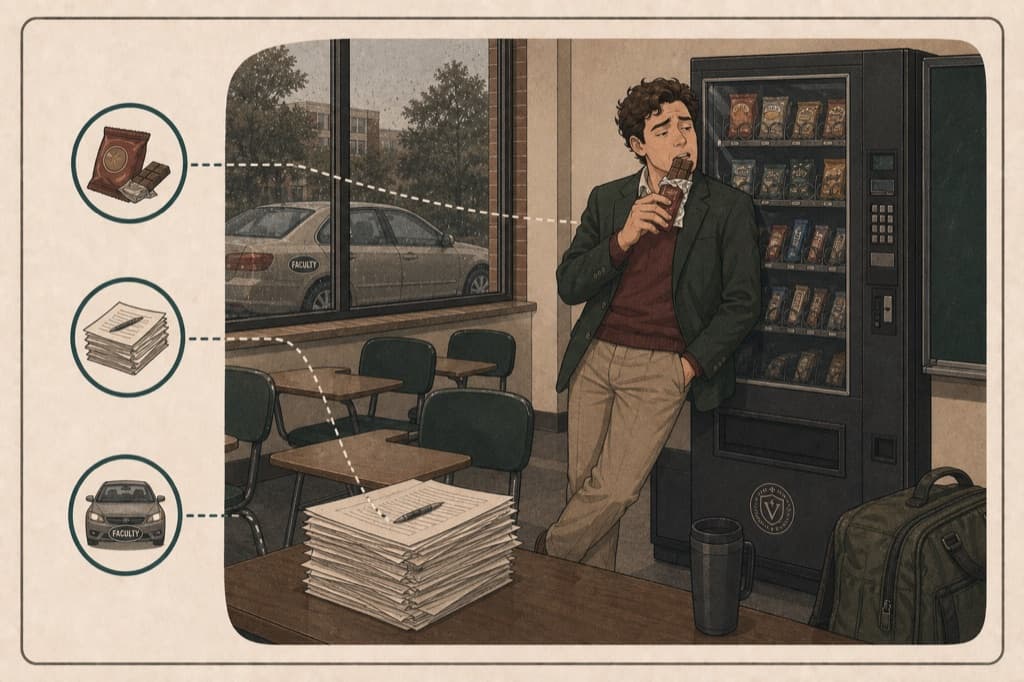 J4Adjunct OuroborosA PhD teaching five classes at three campuses while students ask if office hours are mandatory.
 M10Substack SocialistsTwo graduate degrees, 1,900 free subscribers, and a landlord who inherited the building.
 D2Natural Wine AnarchistsAnti-capitalist, accepts Venmo. Hates landlords, has one, is becoming one.
The receipts
- 01Walks or bikes to work93rd13.1%
- 02Graduate or professional degree94th32.3%
- 03Typical home value94th$1M
- 04Willingness to build95th46.5%
- 05Households with no vehicle89th30.5%
- 06People per square kilometre94th9,760 /sq mi
- 07Home value against local income92nd9.09×
- 08Households over $200,00089th27.0%
- 09Income arriving as dividends, capital gains or partnership81st21.2%
- 10Vehicles per household7th1.09
SourcesFigures from the Internal Revenue Service, the U.S. Census Bureau, Zillow and MoneyHole Research. Everything else is observation.