
The National FabricM · Revealed Preferences
M6M
Office Cowboys
Metropolitan households operating three-quarter-ton agricultural equipment against a services salary and a fourteen-minute commute.
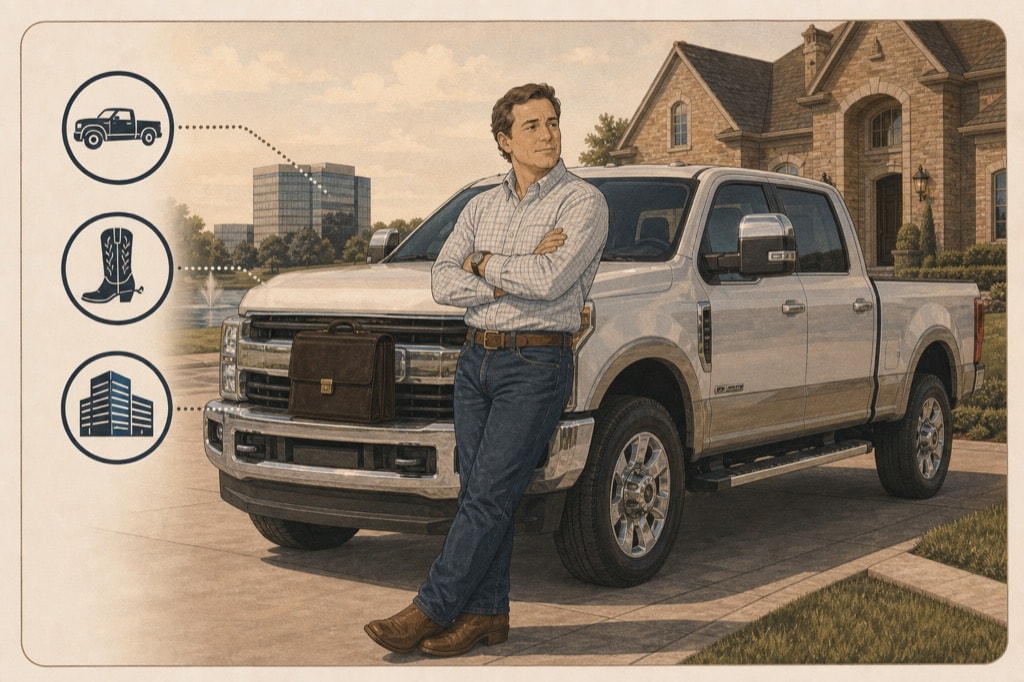
Reference marketFirst identified in Southlake, Texas (ZIP area 76092).
Also found inProsper, Texas; Franklin, Tennessee; Edmond, Oklahoma; Eagle, Idaho; Parker, Colorado.
Thesis
The household finances the capital equipment of an industry it does not work in, in a place that industry does not operate, and the payload rating is exercised principally by a warehouse club.
Rural-production aesthetics, metropolitan-services economics.
Portrait
In their own words
- Age45
- Income$263K
- Net worth$488K
- Education69%
- Home$910K
- Ownership89%
- HouseholdMarried, two kids, one dog with a bandana
- VehicleF-250 Platinum, 6.7L diesel, factory tires at 41,000 miles
- Debt$94K on the truck at 84 months
- Vice
- Payload capacity
- Most likely to
- Explain gooseneck towing to a man who has done it
- Signals
- Yeti in the bed, ranch-style mailbox, a brand of jeans with a stitched pocket
Who they are
This household owns 12,300 pounds of towing capacity and a fourteen-minute commute to a business park. Median household: $263,000 in wages, none of it from anything grown, raised, extracted, or hauled, and $94,000 financed over 84 months against a truck that has pulled a bass boat twice. The bed liner is unmarked. The tailgate has a step in it. This is the 14th percentile for rural and the 92nd for three-vehicle households, and the distance between those two numbers is the entire persona. He is not pretending to be a rancher — he would find the accusation insulting — he simply requires a vehicle that could be one, in the same way a man buys a watch rated to 300 meters and swims in a pool. The truck is a statement about the kind of work he believes he would be good at.
Our neighborhood
Twelve-thousand-square-foot lots with white three-rail fencing enclosing 0.31 acres of irrigated turf and no animal of any kind. Houses built after 2008 in a style the builder calls Hill Country. Every third driveway holds a three-quarter-ton diesel and the neighborhood collectively owns more towing capacity than the county fairgrounds. There is a Tom Thumb, an orthodontist, and a barbecue restaurant with a corrugated steel interior that opened in 2019 and is styled as a smokehouse that has been there for eighty years.
Shopping
The truck is the shopping. Everything else is an accessory to it: a bed cover at $1,850, a lift the dealer installed at delivery, floor liners at $229, and a Yeti in the bed that has never contained a fish. Clothing comes from a Western outfitter in an outdoor mall with valet parking, at $128 a shirt, in a cut designed for men who lift things. Costco is the only place the payload rating is exercised, on Sundays, at 340 pounds.
Spending
A $263,000 household income against a $910,000 house and a $1,460 truck payment that runs to 2031. Diesel is $118 a fill and the annual mileage is 9,400, which puts fuel efficiency in the category of things nobody in the house computes. The wife's Yukon is the vehicle the family actually travels in. Retirement is well funded, which is what makes the truck a preference rather than a mistake, and preferences are the only thing this mode measures.
Media
Two podcasts about discipline, a YouTube channel about overlanding rigs that will never leave pavement, and a truck forum where he is a moderator. Country radio in the truck and nothing in the Yukon. He follows three ranch accounts and one man who breaks horses in Wyoming, and he watches all of it in a home office with a standing desk and a Zoom background of a barn.
Interests
Smoking a brisket for fourteen hours on a $4,200 offset that is described to guests as a rig. Hunting once a season on a leased 800 acres, three hours out, with a group from work. He talks about land constantly — acreage prices, water rights, what a place in Palo Pinto County would run — and the truck is the down payment he has already made on a life he is not going to buy.
Where they live
Darker is more of them.
M6 · OFFICE COWBOYS
ZIP CODES
—
How thick on the ground
$131K
Median household income
1.81× the national median
$729K
Typical home value
2.73× the national median
5.5×
Home value against income
1.46× the national median
41%
Bachelor's degree or higher
1.75× the national median
81%
Owner-occupied
Share of occupied units
$2,521
Median gross rent
Monthly, contract plus utilities
3.09
Average household size
Persons per occupied unit
39.7
Median age
Years
How they compare
Against the average American household.
Median household income
1.81×
$131K here$72K everywhere else
Typical home value
2.73×
$729K here$267K everywhere else
Bachelor's degree or higher
1.75×
40.6% here23.2% everywhere else
Home value against household income
1.46×
5.50× here3.77× everywhere else
Who lives next door
Household types that turn up on the same blocks.
 M5McMansion MartyrsTop-decile earners who converted the entire raise into square footage and now describe themselves, without irony, as house-poor at $268,000.
 M8HomeGoods Wine MomsThe one affluent household where the house does not eat the raise, and the difference is spent within four miles of the driveway.
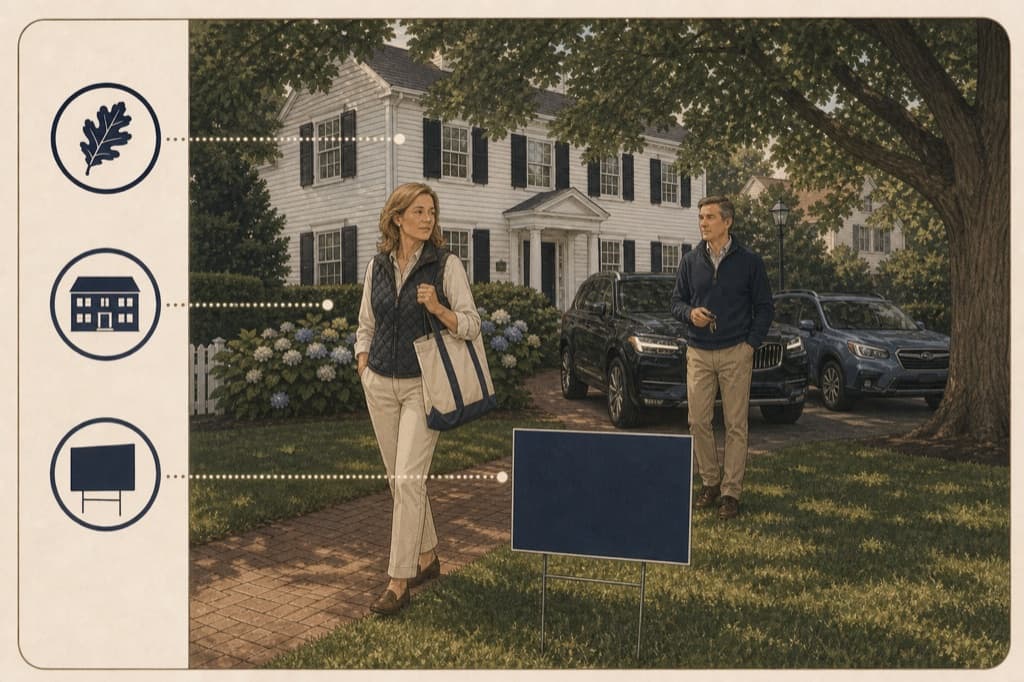 M13Leafy, Liberal & LoadedA $2.2 million colonial, a yard sign about housing, and a zoning board that has not approved an apartment since 1987.
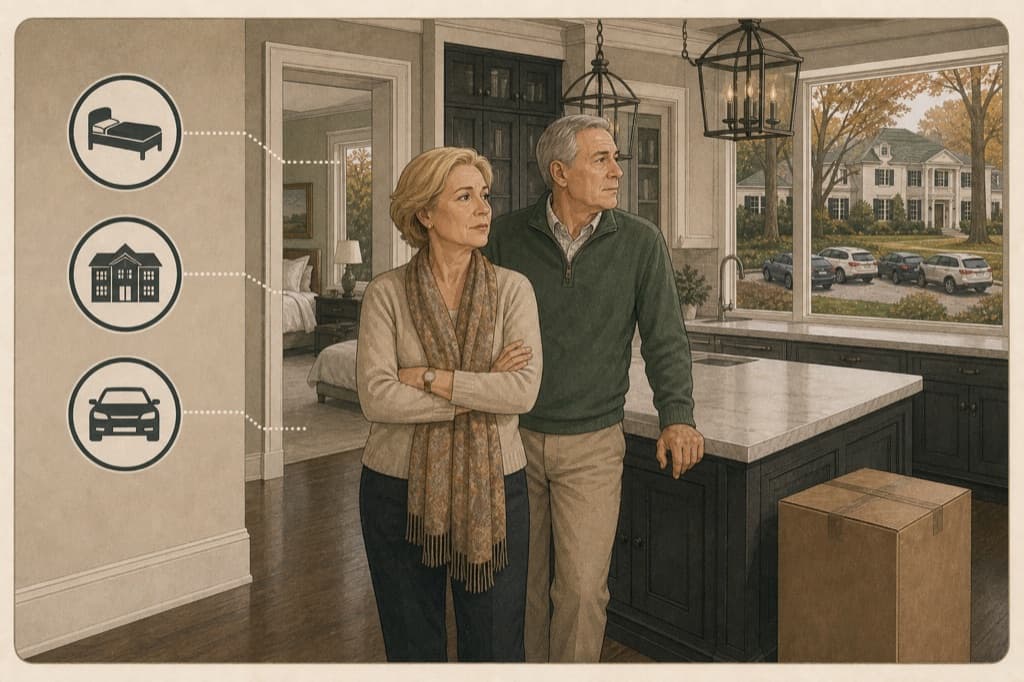 M3Empty-Nest EstatesSix bedrooms, two occupants, four vehicles, and a plan to downsize starting soon.
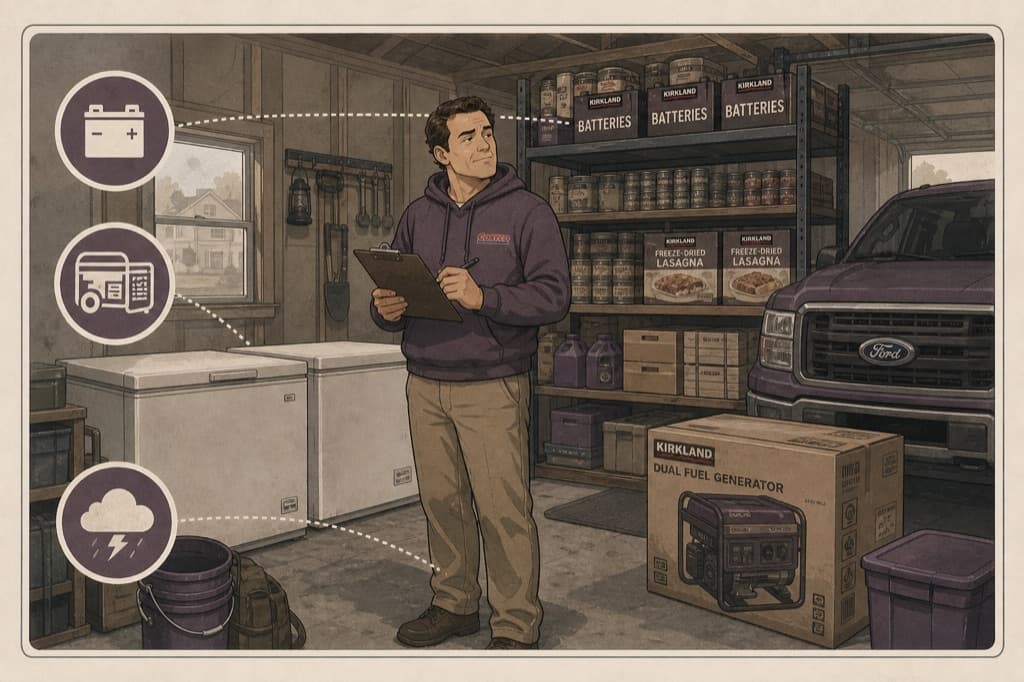 B5Costco DoomsteadersPrepper-lite. A few months of freeze-dried lasagna and a generator.
 B2MegaChurch Industrial ComplexWorship in a converted Walmart with a fog machine, coffee bar, and merch table.
The receipts
- 01Vehicle intensity beyond what the setting requires93rd0.38
- 02Rural-urban continuum position7th0.03
- 03Households over $200,00088th25.4%
- 04Households with three or more vehicles80th39.3%
- 05Four or more bedrooms88th45.9%
- 06Vehicles per household82nd2.39
- 07Works from home74th17.7%
- 08Manufactured housing25th1.2%
- 09Income from business and partnership65th9.0%
- 10Single-family detached67th83.6%
SourcesFigures from the Internal Revenue Service, the U.S. Census Bureau, the Department of Agriculture and MoneyHole Research. Everything else is observation.